Skip to content
GEPCO Duplicate Bill Check Online 2026 – Complete Guide to View, Download and Print Your Electricity Bill
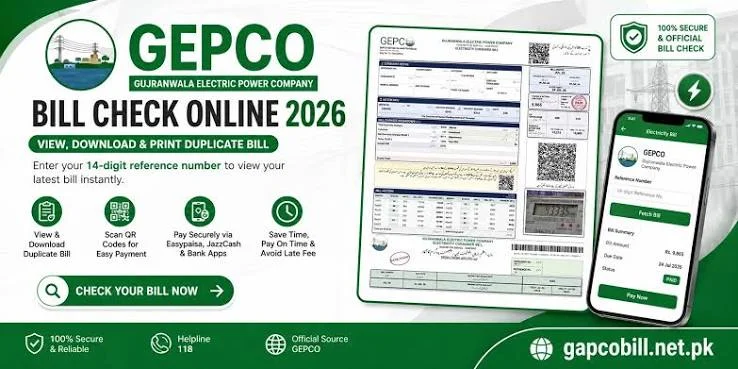
If you live in Gujranwala, Sialkot, Gujrat, Narowal, Hafizabad, or Mandi Bahauddin, GEPCO is the power distribution company responsible for delivering electricity to your home, shop, or factory every single month. GEPCO stands for Gujranwala Electric Power Company, and it operates under WAPDA to serve millions of consumers across northern and central Punjab.
One of the most common problems people face is losing their paper bill, not receiving it on time, or simply needing a fresh copy to make a payment. This is where the GEPCO duplicate bill comes in. A duplicate bill is nothing more than an official digital copy of your original monthly electricity invoice. It carries the same legal value and is accepted at banks, mobile apps, and payment counters just like the original.
This guide covers everything you need to know about the GEPCO duplicate bill check process, how to view your GEPCO bill online, how to check your previous month bill, what to do when your bill is not found, how to pay, how to file a complaint, and much more. Whether you are doing this for the first time or looking for a faster way to manage your electricity account, this article has all the answers written in plain and simple language.
What Is a GEPCO Duplicate Bill?
A GEPCO duplicate bill is an official electronic copy of your monthly electricity statement that is generated through the official GEPCO billing portal maintained by PITC (Punjab Information Technology Commission). It contains all the same information your paper bill carries, including your name, reference number, units consumed, payable amount, due date, and applicable taxes.
The word duplicate does not mean it is a fake or unofficial document. It simply means you are accessing a second copy of your bill digitally because the original paper version was lost, damaged, never delivered, or you just need it for a record. Many banks, mobile wallets, and utility counters accept the printed duplicate without any questions.
People also commonly search for this under names like GEPCO online bill copy, GEPCO lost bill, GEPCO current month bill, or GEPCO reprint bill. All of these refer to the same thing.
Why Would You Need a GEPCO Duplicate Bill?
There are several common situations where you would need to access your GEPCO duplicate bill online:
Your paper bill was not delivered this month by the postman. This happens more often than people realize, especially during rainy weather, holidays, or delivery errors.
You misplaced or accidentally threw away the paper bill before paying it. This is one of the most frequent reasons people look for the online copy.
The bill got torn or wet and is no longer readable. The amount or due date may not be visible anymore.
You want to confirm the exact amount before visiting a bank or using a mobile payment app.
You need a record of your electricity bills for business documentation, a rental agreement, or proof of residence.
You want to verify whether a payment you made last month was registered or not.
Any of these situations is reason enough to check your GEPCO bill online and download a fresh copy within seconds.
What You Need to Check Your GEPCO Duplicate Bill Online
Before you start, you only need two things:
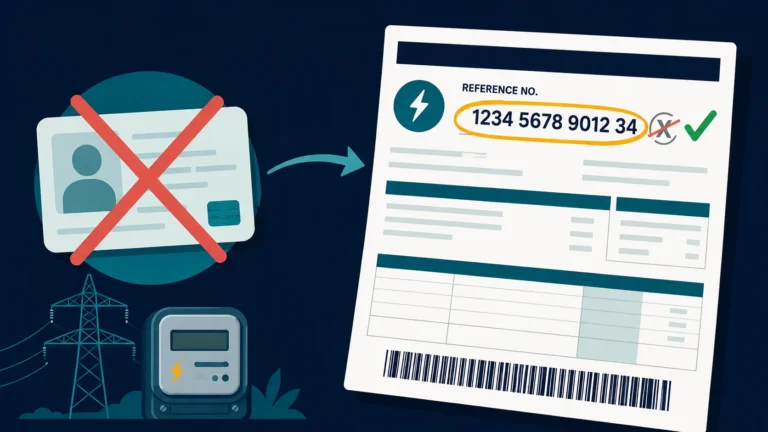
The first is your 14-digit GEPCO reference number. This is the most important piece of information. It is a fixed number printed near the top of every GEPCO electricity bill you have ever received. It does not change from month to month. It is sometimes also called the consumer reference number.
The second is a working internet connection and any phone, tablet, laptop, or desktop browser.
That is all. You do not need to log in, create an account, or provide any personal information like your CNIC, name, or address. The GEPCO online system does not support CNIC-based searches, so if someone tells you that you can check your bill using your national identity card number, that information is incorrect. The reference number is the only way.
Some tools and portals also support a 10-digit Customer ID as an alternative to the 14-digit reference number. If you know your Customer ID from a banking app or previous bill, you can try that as well.
How to Check GEPCO Bill Online Step by Step
The process is simple and takes less than one minute once you have your reference number ready. Here is how to do it:
Step 1: Find your 14-digit reference number on any previous GEPCO electricity bill. It is usually printed at the top left corner of the bill inside a clearly labeled box. It is 14 digits long and does not contain any spaces, dashes, or letters except possibly a letter like “R” for Rural Area or “U” for Urban Area at the very end, which you should not type into the search box.
Step 2: Open the official GEPCO bill checking portal. You can visit bill.pitc.com.pk or use any trusted third-party tool that redirects you to the official PITC system. The PITC portal is the government-approved billing backend for GEPCO and several other DISCOs in Punjab.
Step 3: Enter your 14-digit reference number carefully in the reference number input field. Double-check every digit before pressing submit. Most cases where people say “bill not found” are caused by a single wrong digit in the reference number.
Step 4: Click the Search or Check Bill button.
Step 5: Your current month’s GEPCO bill will appear on screen within a few seconds. You will be able to see your billing month, units consumed, total amount payable, due date, and after-due-date amount.
Step 6: To save a copy, click the Print button or press Ctrl+P on your keyboard if you are using a computer. In the print dialog, choose “Save as PDF” to download the bill as a PDF file on your device.
That PDF is your official GEPCO duplicate bill. You can share it with your family, send it to your tenant, present it at a bank, or pay it using a mobile app. It carries the same authority as the original.
How to Check GEPCO Bill Online by Customer ID
Not everyone has an old paper bill at hand. If your reference number is unavailable, you can try your Customer ID instead. The Customer ID is a 10-digit number that is linked to your consumer account. Many banking apps like JazzCash, EasyPaisa, and HBL Mobile display your Customer ID in the biller section after you add GEPCO as a biller.
On some GEPCO bill-checking platforms, there is a separate tab or toggle that allows you to switch from reference number search to Customer ID search. Enter the 10-digit Customer ID there and click the search button. The result should be the same, showing you your latest electricity bill.
How to Check GEPCO Previous Month Bill Online
This is one of the most commonly asked questions and one that most competitor websites handle poorly, so it deserves a thorough answer here.
The GEPCO online system through the PITC portal is designed to show your current month’s bill only. It does not let you directly pull up a bill from two or three months ago by simply entering your reference number again. When you search using your reference number, the latest bill in the system appears, which is always the current billing cycle.
However, the good news is that your current bill already contains a billing history chart printed on it. When you download the PDF of your current bill, scroll to the lower section where you will see a graph or table showing your unit consumption and charges for the past several months. This gives you a partial view of your previous bills without needing to search for them individually.
If you need an actual copy of a specific previous month’s bill, here are your options:
You can call the GEPCO helpline at 118 and request billing history for a specific month. Make sure you have your reference number ready when you call.
You can visit your nearest GEPCO division office in person and request a copy of your bill from a specific month. Bring your CNIC and reference number.
If you have a record of paying through a banking app like JazzCash or EasyPaisa, the payment receipt in the app often carries the bill amount and billing month information, which can serve as proof of your previous dues.
For some portals, monthly bill archives are available where you can click on a specific month and year to pull the bill from that period. If the portal you are using supports this feature, look for a calendar or month selector option on the same page.
How to Download GEPCO Duplicate Bill as PDF
Downloading the GEPCO duplicate bill as a PDF is quick and free. Once your bill loads on screen after entering your reference number, you will usually see a Download or Print button at the top of the bill page. Click that button.
If there is no dedicated download button, use your browser’s built-in print option. Press Ctrl+P on Windows or Command+P on a Mac. In the print dialog that opens, look for the Destination or Printer option and select “Save as PDF” instead of an actual printer. Then click Save or Print, and your browser will save the bill as a PDF file in your downloads folder.
This PDF file is fully valid. You can open it, zoom into it, and present it at any bank counter or payment location. Shops and landlords also accept it as a utility bill for address verification purposes.
How to Print GEPCO Duplicate Bill
If you want a physical paper copy of your GEPCO bill, the process is the same as downloading, except instead of choosing “Save as PDF” in the print dialog, you select your actual printer and click Print.
Make sure your printer is connected and has paper loaded. The bill will print exactly as it appears on screen. This printed copy is just as valid as the original bill that was delivered to your home.
If you do not have a printer at home, you can take your phone or laptop to any nearby print shop. Open the bill on your device, show the shopkeeper, and ask them to print it. Most print shops in Pakistan are familiar with this and can do it within minutes for a few rupees.
Where Is the GEPCO Reference Number Located?
The 14-digit reference number is always printed in the top section of your GEPCO electricity bill. It is usually inside a clearly labeled box that says “Reference No.” or “Ref. No.” in the upper left area of the bill.
Here are a few important things to know about this number:
It is exactly 14 digits long. If you count more or fewer digits, you are reading the wrong number.
It stays the same every single month. Your reference number never changes, which means once you save it, you can use it to check your bill forever.
It is different from your meter number. Your meter number is a shorter code printed separately on the bill. Do not confuse the two.
It may end in a letter such as “R” for rural consumers or “U” for urban consumers. When entering the reference number into an online search field, do not type that letter. Enter only the 14 digits.
A smart tip: save your reference number in your phone contacts or a notes app right now. That way you will never need to hunt for your paper bill again just to check your electricity account.
What Do You See on the GEPCO Duplicate Bill?
When your GEPCO bill loads on screen, you will find all the important details arranged in different sections. Here is what you can expect to see:
Your name and consumer information including your address and the area where your meter is installed.
The billing month and year so you know which period this bill covers.
Your 14-digit reference number and your Customer ID.
The previous meter reading and the current meter reading, along with the total units consumed this month.
The tariff category, which tells you whether you are a domestic consumer, commercial consumer, or an industrial account holder.
The current charges for electricity based on the units you consumed and your applicable slab rate.
Fuel Price Adjustment, which changes every month based on national energy policies. This is often the reason people are surprised by a higher or lower bill than expected.
Fixed charges that apply regardless of how many units you used.
Government taxes including the Electricity Duty and GST.
The total amount payable before the due date.
The amount payable after the due date, which includes a late payment surcharge.
A billing history section at the bottom showing your consumption and charges for the past several months.
Understanding these sections helps you make sense of your bill and spot any error quickly.
GEPCO Tariff and Unit Rates 2026
Knowing the rates helps you estimate your bill before it arrives. GEPCO follows the tariff structure approved by NEPRA (National Electric Power Regulatory Authority), which is the government body that regulates electricity pricing in Pakistan.
For most domestic consumers on a single-phase meter, the slab system works like this: the more units you consume in a month, the higher the rate applied to the extra units above each slab threshold. This means a household consuming 150 units pays at one rate, while a household consuming 500 units pays a higher rate on the portion above 300 units.
As of 2026, the approximate rates for unprotected residential consumers are as follows. For 1 to 100 units, the rate is around Rs. 22 per unit. For 101 to 200 units, the rate increases to about Rs. 29 per unit. For 201 to 300 units, you are looking at roughly Rs. 33 per unit. Above 300 units, the rate continues to increase along with a fixed monthly charge that gets added on top.
Protected consumers and lifeline consumers who use very few units per month pay at a lower subsidized rate.
If you have a three-phase meter because your sanctioned load is above 5 kilowatts, you are most likely billed on a Time of Use system. This means your rate depends on whether you use electricity during peak hours in the evening or during off-peak hours at night and early morning. Shifting heavy appliance use to off-peak hours can noticeably reduce your monthly bill.
Commercial consumers have their own rate structure, which is higher than domestic rates. If you own a shop or a small business on a single-phase connection, your per-unit rate is roughly Rs. 37 or above depending on your usage and applicable surcharges.
On top of all base rates, GEPCO adds the Fuel Price Adjustment, Electricity Duty, and GST every month. These additions can account for 20 to 25 percent of your total bill amount. This is why your bill might look higher than you expect even if your unit consumption did not increase much.
A rough way to estimate your bill before it arrives is to multiply the units you expect to consume by your slab rate and then add 22 percent on top for taxes and adjustments. It will not match exactly, but it gives you a useful ballpark figure.
How to Pay GEPCO Bill Online
GEPCO gives consumers several convenient ways to pay their electricity bill. You can choose whichever method suits you best.
JazzCash: Open the JazzCash app on your phone, go to Bill Payments, select Electricity, choose GEPCO, enter your 14-digit reference number, confirm the amount, and pay. The payment is processed instantly and you get a confirmation on your screen.
EasyPaisa: The process on EasyPaisa is nearly identical. Open the app, go to Pay Bills, select Electricity, choose GEPCO, enter your reference number, review the amount, and confirm the payment.
Internet Banking: If you bank with HBL, UBL, MCB, Meezan Bank, Allied Bank, or any other major bank, you can add GEPCO as a biller in your internet banking portal. Once added, you can pay your bill each month in a few taps without visiting a branch.
Bank Branch: Walk into any major bank branch and ask the cashier to process your GEPCO payment. Provide your 14-digit reference number and the cashier will handle the rest. This method is free of convenience charges but takes a bit more time.
ATM: Most bank ATMs in Pakistan now have a Bill Payment option in the main menu. Insert your card, choose Bill Payment, select GEPCO or Electricity, enter your reference number, and proceed. Keep the receipt printed by the ATM as proof of payment.
Post Office: Pakistan Post offices also accept GEPCO bill payments in many areas. This is a useful option if you live in a smaller town where banking services are limited.
One important point: always keep the payment receipt or a screenshot of your payment confirmation. If your bill ever shows up as unpaid in the next billing cycle due to a processing delay between the payment service and GEPCO’s system, the receipt is your fastest way to prove the payment and get the error corrected.
What to Do If Your GEPCO Bill Is Not Found Online
If you enter your reference number and the portal says “bill not found” or shows an error, do not panic. This is a common situation and it almost always has a simple explanation.
The most likely reason is a typing mistake. Go back and check every single digit of your reference number again. One wrong digit is enough to cause this error. Pay special attention to digits that look similar, like 0 and O, or 1 and 7.
Another common reason is that your bill for this month has not yet been generated in the system. GEPCO generates bills on a rolling cycle, and your billing date may not have come yet. Try again in a day or two.
A temporary server issue can also cause the portal to return an error. The PITC portal sometimes experiences high traffic or maintenance periods. Clear your browser cache, try a different browser, or try again after a few minutes.
Make sure you are not entering any letters, spaces, or symbols along with the digits. The reference number input field should only contain numbers.
If none of these solutions work, call GEPCO’s helpline at 118 and provide your Consumer ID or previous bill details. They can confirm whether your account is in the system and what your correct reference number is.
How to Check Whether Your GEPCO Bill Is Paid or Unpaid
When you generate your duplicate bill online, look at the bill document itself. There is usually a Payment Status section or indicator that shows whether the current month’s dues have been cleared. If it says “Paid” or shows a zero balance, your payment has been recorded. If it shows the full amount as pending, the payment is still due or has not been processed yet.
Keep in mind that payments made through mobile apps and banks can take anywhere from a few hours to one business day to reflect in GEPCO’s system. If you paid earlier today and the bill still shows as unpaid, wait until the next day and check again.
If you paid more than two business days ago and the bill still shows as unpaid, contact the bank or app you used for payment first. Then contact GEPCO at 118 with your payment receipt details.
GEPCO Service Areas and Coverage
GEPCO is responsible for electricity distribution across six districts in Punjab. These are:
Gujranwala, which is the headquarters of GEPCO and the largest city in its coverage area. It is a major industrial and commercial hub in Punjab.
Sialkot, which is famous for its export industry including sports goods, surgical instruments, and leather products. A huge number of factories and small businesses here fall under GEPCO.
Gujrat, which has a significant industrial presence, particularly in the furniture and electronics manufacturing sectors.
Narowal, a predominantly agricultural district that also has significant residential electricity demand.
Hafizabad, another agricultural district in the GEPCO service zone.
Mandi Bahauddin, a district with a mix of agricultural and small industrial consumers.
All consumers in these six districts receive their electricity bills from GEPCO and can use the same reference number system to check and download their duplicate bills online.
Understanding Charges on Your GEPCO Bill
Many people are confused by the different line items on their electricity bill. Here is a breakdown of the most common charges you will find:
FPA or Fuel Price Adjustment: This amount changes every month and reflects the cost of the fuel used to generate electricity. When international oil or gas prices rise, this surcharge increases. When fuel costs fall, it decreases. Sometimes it can even be negative, which means your total bill goes down.
FC Surcharge: This is a fixed surcharge collected under a government directive.
TR Surcharge: Another government-mandated charge related to financing arrangements in the power sector.
Quarterly Tariff Adjustment: NEPRA periodically reviews tariffs and may approve adjustments. These appear on your bill in the quarter when they are applied.
Electricity Duty: A provincial tax on electricity consumption.
GST: The standard Goods and Services Tax applied to electricity bills.
TV Fee: A fixed monthly charge that was added to electricity bills as a fee for national television broadcasting. It applies to most domestic consumers.
Meter Rent: A small monthly charge for the use of the electricity meter installed at your premises.
Knowing these charges helps you understand why your bill is the amount it is, and helps you spot any unusual or incorrect charge that you can then dispute through the complaint system.
GEPCO Complaint Numbers and How to Register a Complaint
If you believe your bill is incorrect, your meter is faulty, you have been overbilled, or your power supply has a problem, GEPCO gives you several official channels to report the issue.
The main helpline is 118. This number works 24 hours a day, seven days a week. When you call, be ready with your reference number, your name, and a clear description of the problem. The call agent will register your complaint and give you a tracking number. Keep that number so you can follow up later.
You can also send an SMS to 8118 for electricity complaints. This is useful when calling is inconvenient.
The free-call number for customer service is 0800-000-34. This is for general inquiries and customer support during office hours.
For billing complaints specifically, you can email GEPCO or submit your complaint through the CCMS (Centralized Complaint Management System) portal, which is available at ccms.pitc.com.pk. The CCMS system is the official government-approved platform for electricity complaints across all DISCOs in Punjab. It provides tracking so you can monitor the status of your complaint.
If GEPCO does not resolve your complaint within a reasonable time, you can escalate to NEPRA using the Asaan Approach app, which is the official regulator-level channel for electricity consumers across Pakistan.
When registering a complaint, being specific always helps. Instead of saying “my bill is wrong,” try saying “my bill for August 2026 shows 450 units consumed but my meter reading before and after this month shows only 280 units. My reference number is XXXXXXXXXX.” The more detail you provide, the faster the complaint gets processed.
For urgent issues like GEPCO complaint centers, the direct numbers are 055-9200592 and 055-9200504. These work as backup lines when 118 is busy.
GEPCO Bill on Mobile: How to Check Via JazzCash and EasyPaisa Apps
Both JazzCash and EasyPaisa allow you to view your GEPCO bill details within the app before you pay. This means you do not even need to visit a separate website to check your bill.
On JazzCash, open the app, tap Pay Bills, then Electricity, then select GEPCO from the list of DISCOs. Enter your 14-digit reference number. The app will show you your current bill amount, due date, and billing month. You can then proceed to pay or simply note down the amount and pay somewhere else.
The same works on EasyPaisa. Go to Pay Bills, choose Electricity, select GEPCO, enter your reference number, and the bill details will appear.
This is one of the quickest ways to check your bill without needing to open a browser and navigate to a billing portal. It is especially convenient on mobile phones where a full website can sometimes be slower to load.
GEPCO Bill Via SMS Service
GEPCO also offers an SMS-based service for some consumers. By sending an SMS with your reference number to a designated GEPCO number, you can receive your bill details as a text message. This is particularly useful in areas with slow internet connections where loading a full webpage takes too long.
Call the GEPCO helpline at 118 to confirm the current SMS number and format for this service, as these details can change.
How AMR Meters Are Changing GEPCO Billing
GEPCO has been gradually shifting consumers to AMR meters, which stands for Automated Meter Reading. These smart meters have a built-in SIM card that automatically sends your electricity reading to GEPCO’s central computer system every month without requiring a person to visit your home and read the meter manually.
This change benefits consumers in a real way. Because the reading is transmitted digitally and directly, the chances of human error in meter reading go down significantly. Incorrect or estimated bills become much less common when the system reads the meter automatically.
For GEPCO, AMR meters also enable remote disconnection. If a consumer does not pay their bill for two or three months, the system can disconnect their meter from the central server without sending a technician to their address.
If your GEPCO bill recently changed format or you noticed a new type of meter installed at your home, it is likely part of this AMR rollout. New connections in most areas now receive AMR meters by default. The cost for a single-phase AMR meter connection is approximately Rs. 17,500 plus a security deposit. For a three-phase AMR meter, the cost is around Rs. 48,000 with a separate security deposit based on your sanctioned load.
How GEPCO Uses Transformer Wise Monitoring to Protect Honest Consumers
GEPCO, like other electricity distribution companies in Pakistan, now uses a transformer-based monitoring system to keep billing fair and accurate for honest consumers. Here is how it works in simple terms.
Every transformer supplies electricity to a group of meters in a neighborhood. The system records the total units of electricity that leave the transformer. It also records the total units billed across all the meters connected to that transformer. If the units leaving the transformer are significantly higher than the units billed to consumers, the difference represents what is called a line loss.
When this gap is unusually large, GEPCO investigates the cause. The investigation often reveals illegal connections, meter tampering, or electricity theft. The people responsible face recovery charges and legal consequences.
For honest consumers, this system works in their favor. It keeps billing accurate and helps prevent the kind of widespread electricity theft that inflates costs for everyone. If you ever notice your bill jumping up suddenly without any real change in your consumption habits, it is worth checking your meter and reporting any suspicious wiring near your connection to GEPCO.
Tips to Reduce Your GEPCO Electricity Bill
Many people focus on the total rupee amount of their bill rather than the actual units consumed. But the rupee amount changes with tariff adjustments even if your usage stays the same. Tracking your units is the smarter approach because it reflects your actual consumption.
Here are practical tips that can genuinely make a difference:
Service your air conditioner regularly. A dirty filter or low refrigerant makes the AC work harder and consume more electricity for the same cooling effect. A clean and well-maintained AC can use 10 to 20 percent less electricity compared to a neglected one.
Switch to LED bulbs throughout your home. If you still have older style bulbs, replacing them with LEDs can reduce your lighting costs by 70 to 80 percent for the same amount of light.
Turn off appliances completely instead of leaving them on standby. Many electronics continue to draw small amounts of power even when switched off at the device level but remain plugged in.
Use your washing machine and dishwasher with full loads rather than running them partially full. This gets you more work done per unit of electricity.
If you have a three-phase meter on a Time of Use tariff, run your heavy appliances like washing machines and water heaters during off-peak hours when the rate is lower.
Check your monthly bill carefully and compare it to the same month last year. If the units consumed are significantly higher without a clear reason, have your meter inspected. Faulty meters do happen and they can run fast, charging you for more units than you actually used.
How to Apply for a New GEPCO Connection
If you have recently moved to a new home, opened a shop, or need a fresh electricity connection in GEPCO’s service area, the process involves a few straightforward steps.
You can apply through GEPCO’s official new connection system called ENC (Electricity New Connection), which is available at enc.com.pk. You can also visit your nearest GEPCO division office to apply in person.
The documents you will need include a copy of your CNIC, proof of property ownership such as a property tax receipt or sale deed, or a rent agreement if you are renting. You will also need a passport-size photograph.
After submitting the application, a GEPCO team will inspect your site to assess the load requirements and the distance from the nearest power line.
You will then receive a Demand Notice mentioning the exact charges for your connection. Pay those charges and the installation process begins.
Once the meter is installed, you will receive your first bill the following month along with your new 14-digit reference number that you will use for all future bill checks.
One detail worth knowing upfront: if your property is more than 100 meters away from the nearest GEPCO electricity pole, additional charges for extending the LT line to your location will apply. These are calculated based on the actual distance and material required, so ask your local office for a site-specific estimate before budgeting.
Net Metering in GEPCO Area
If you have installed solar panels on your home or commercial property, you may be eligible for net metering under GEPCO. Net metering allows you to export surplus electricity generated by your solar panels back into the GEPCO grid. This exported electricity appears as a credit on your monthly bill.
During daylight hours when your panels generate more power than your home consumes, the excess goes to the grid. At night or on cloudy days when your panels are not generating enough, you draw from the grid as usual. At the end of the billing month, the grid consumption is offset against the export credit, and you only pay for the net difference.
The financial benefit depends on how large your solar system is, how much electricity you use during the day versus at night, and the current net metering tariff approved by NEPRA.
To apply for net metering under GEPCO, you need to submit an application with technical details of your solar installation, including the inverter rating and panel capacity. GEPCO then reviews the application, inspects your installation, and installs a bidirectional meter to track both import and export. Once set up, your monthly bill will clearly show the units exported and the credit applied.
GEPCO Bill Check: Common Questions Answered
Can I check my GEPCO bill without my reference number?
If you do not have the reference number, try your Customer ID, which is a 10-digit number that some banking apps display. If you have neither, call GEPCO helpline 118 and provide your CNIC and address. They can help you retrieve your reference number.
My bill says I consumed 900 units but I know I did not. What should I do?
First, read your own meter and check the reading shown on the bill. If the readings do not match, file a complaint immediately through the CCMS portal or by calling 118. A meter inspection will be arranged.
Can I pay after the due date?
Yes, you can still pay after the due date. However, a late payment surcharge is added to your amount. The after-due-date amount is clearly printed on your bill. Pay as soon as possible to avoid disconnection.
Is the duplicate bill accepted at all banks?
Yes. The digital GEPCO duplicate bill is identical to the original and is accepted at all bank branches, ATMs, mobile payment platforms, and post offices.
What if I have two meters at the same address?
Each meter has its own unique 14-digit reference number. You need to check and pay each meter separately using its own reference number.
Can I check GEPCO bills for a rented property I own?
Yes. As long as you have the reference number or Customer ID for that property, you can check the bill from anywhere.
How many months of history can I see in the billing history section?
The billing history chart on the downloaded bill typically shows the past 12 months of consumption data. For older records, contact GEPCO directly.
Keeping Your GEPCO Bills Organized
A habit that saves a lot of headache is keeping a simple record of your GEPCO bills. You do not need anything fancy. Here are a few practical suggestions:
Save your 14-digit reference number in your phone contacts under the name “GEPCO Ref No.” That way you always have it when you need it.
After paying your bill each month, take a screenshot of the payment confirmation and save it in a dedicated phone album or folder called “Utility Bills.” This creates a record you can refer to if a payment dispute arises.
If you download the PDF of your duplicate bill, save it in a folder on your phone or computer with the month and year in the file name. For example, “GEPCO Bill August 2026.” Over time you will build a personal archive of all your bills.
Check your bill every month even if you pay through a bank and never need to look at the paper bill. It only takes a minute and gives you visibility into your consumption patterns and helps you catch errors early.
Conclusion
Checking your GEPCO duplicate bill online is one of the simplest things you can do to stay on top of your household finances. You no longer need to wait for the postman, hunt for a lost paper bill, or drive to a GEPCO office just to find out how much you owe this month. The entire process takes less than a minute with the right reference number and a phone or computer.
This guide has covered everything from the basics of what a GEPCO duplicate bill is, how to find your reference number, how to check your bill online and download it as a PDF, all the way to understanding your bill charges, checking previous month bills, paying through different channels, and filing a complaint when something is wrong.
Practical checklist for GEPCO Duplicate Bill Check Online 2026 – Complete Guide to View, Download and Print Your Electricity Bill
Before you finish this task, write down the bill month, reference number, current reading, previous reading, units, due date and payable amount. Keeping these fields together helps you explain the issue in one message and gives the office a useful starting point. If you are checking a bill for a family member or tenant, confirm who is responsible for the connection and keep the account holder informed.
Make a month-by-month record rather than relying on memory. A simple note can include the reading date, meter photograph, units consumed, payment date, receipt number and any complaint number. When a value changes, describe the change in plain language: for example, the reading is estimated, the units are higher than the meter record, or an adjustment appears for the first time. Clear facts are more useful than an accusation.
How to compare two GEPCO bills
Place the current and previous copies side by side. First compare the billing period and reading dates. Next compare units, tariff category, fixed charges, fuel or quarterly adjustments, taxes, arrears and the final payable amount. A total can rise even when one line decreases because several components are calculated separately. Mark each changed line and keep a short explanation beside it.
If the bill is being checked on a mobile phone, zoom in before reading small numbers and download the file instead of relying on a temporary screen. If you print it, choose a readable scale and keep the first page with the reference number. Never send a cropped image that removes the billing month or account details when asking for official help.
When to contact GEPCO
Contact the relevant official route when the account details are wrong, the meter reading is clearly inconsistent, a payment is not reflected, a duplicate bill cannot be retrieved, or a service request has passed its stated follow-up time. Include the exact field in question, the evidence you have, and the action you want: correction, confirmation, duplicate copy or status update. Save the response and the complaint number.
Tariffs, taxes, adjustment rules and office procedures can change. Use the current information published by GEPCO for the final decision, especially before paying an unusual amount or submitting identity documents. This article explains a checking method; it does not replace an official bill, tariff notification or written response from the distribution company.
Short answer for search and voice queries
To check a GEPCO bill, use the exact reference number on the bill through the official lookup route, review the billing month, readings, units, charges, taxes, due date and payable amount, then save a copy. If a field is wrong, photograph the meter or receipt, keep the bill and contact the correct GEPCO subdivision with a complaint reference.
Related GEPCO guides
Use these related guides to compare your bill, keep the right records and choose the correct next step:
Check your GEPCO bill in seconds
Enter your 14-digit reference number and your current bill, due date and downloadable copy load right away.
Disclaimer: GEPCOCheckBill.com.pk is an independent, informational guide and is not affiliated with, endorsed by, or operated by the Gujranwala Electric Power Company (GEPCO) or PITC. All bill data displayed comes directly from the official billing records. This site does not generate, alter, or process payments.